
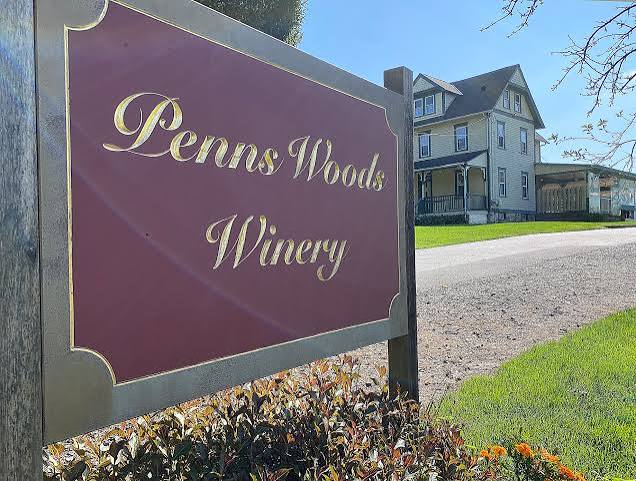
What does twenty-five years of commitment to Pennsylvania-grown grapes look like in the glass? At Penns Woods Winery in Chadds Ford, the answer comes in several forms, from crisp sparkling wine and Sauvignon Blanc to Pinot Noir, Cabernet Franc and reserve reds.
Founded in 2001 by Gino Razzi, Penns Woods has spent a quarter century pursuing an ambitious idea: producing European-inspired wines from grapes grown in Pennsylvania. Its 25th anniversary offered a good opportunity to explore how that vision has developed.
I visited Penns Woods recently, when the winery was offering a special anniversary flight of five wines. The staff were friendly, knowledgeable and helpful, making the tasting both enjoyable and informative. The selection provided an interesting look at the range of wines the winery is producing and its place in the Brandywine Valley wine community.
From Abruzzo to Chadds Ford
The story of Penns Woods begins in Italy.
Founder Gino Razzi grew up in Abruzzo, where he gained early winemaking experience, before immigrating to the United States in 1962. He went on to build a successful career importing Italian wines, introducing American consumers to the wines of his homeland. After decades in the wine business, he turned his attention to producing wine in Pennsylvania.
In Chadds Ford, Razzi acquired an established vineyard and a nineteenth-century farmhouse that became the winery’s tasting room. His vision was to bring his European wine experience to the possibilities of southeastern Pennsylvania.
Penns Woods has remained a family business, with Gino’s daughter Carley serving as president. Winemaker and vineyard manager Davide Creato, also originally from Abruzzo, has helped develop its vineyards and wines.
One aspect of Penns Woods that particularly interests me is its commitment to Pennsylvania-grown grapes. The winery states that its wines are made from 100% Pennsylvania-grown fruit, including those featured in this anniversary tasting.
Not all wineries in the broader Brandywine region rely exclusively on Pennsylvania grapes. There is nothing inherently wrong with sourcing fruit elsewhere, but for those interested in understanding the region’s wines, the distinction matters. Where grapes are grown influences their character, and Penns Woods offers an opportunity to explore what Pennsylvania’s growing conditions can produce.
An Anniversary Flight Worth Exploring
The tasting began with the 2024 Blanc de Blanc, a sparkling wine that made a refreshing introduction. Pale lemon in appearance, it offered delicate aromas of green apple, pear, lemon and lime. The bubbles were soft, with medium-plus acidity providing freshness. Green apple and pear carried through on the palate, accompanied by a subtle biscuit note and a medium finish.
I found it crisp, refreshing and rounded rather than sharply acidic. It struck me as a wine to enjoy now, perhaps as an aperitif, rather than one intended for extended aging.
The 2025 Sauvignon Blanc was interesting for a different reason. Its aromas of green grass, lemon, lime and floral notes were familiar characteristics of the grape, but the palate offered a rounder expression than I might have expected.
Alongside green apple and pear, I detected biscuit and toast notes. High acidity maintained freshness, while the medium body contributed to a rounded feel. Sauvignon Blanc is often associated with bright citrus, grassy aromas and pronounced acidity. This wine had those elements, but the combination of freshness and roundness made it particularly interesting to me.
Moving to the reds, the tasting offered three different expressions of fruit, structure and winemaking style.
The 2023 Pinot Noir showed a medium ruby color with some amber tones. Aromas of red cherry, strawberry and raspberry were accompanied by vanilla, with those same red fruits continuing onto the palate. High acidity, soft medium tannins and a medium body provided structure, while the relatively high alcohol and long finish added to its character.
Pinot Noir can be challenging to grow, especially in regions where growing-season conditions vary considerably from year to year. What interested me here was the combination of bright red fruit, pronounced acidity and a long finish. I found it enjoyable now, with enough structure to suggest some additional aging potential.
Next came the 2019 Cabernet Franc Reserve, a wine of particular interest to me as I continue exploring Cabernet Franc from the Brandywine Valley.
It showed a medium ruby color, with aromas of red cherry, strawberry and raspberry, accompanied by vanilla, toast and a slight hint of black pepper. On the palate, the red-fruit character continued, joined by vanilla and smoke. High acidity and medium-plus tannins provided structure, while the alcohol was relatively high.
I considered it ready to drink now, although it also showed potential for further aging. What I particularly enjoyed was the combination of red fruit, spice and oak-associated characteristics, giving the wine a distinctive character while retaining recognizable qualities of Cabernet Franc.
I’m currently exploring how Cabernet Franc grown in the Brandywine Valley compares with wines from Chinon in France’s Loire Valley. The Penns Woods Reserve will be part of that comparison, so I’ll return to it in greater detail in a future article.
The flight concluded with the 2021 Proprietor Reserve, which offered a different balance of fruit and structure. Medium ruby in color, it showed aromas of red cherry, red plum and vanilla. The palate was pronounced in intensity, with cherry and plum flavors, relatively high alcohol and mild, soft tannins.
Compared with the Cabernet Franc Reserve, I found the Proprietor Reserve softer in its tannin structure and particularly approachable. It was enjoyable now, although I thought it also had potential for further aging.
The contrast among the three reds was one of the more interesting aspects of the tasting. The Pinot Noir emphasized bright fruit and acidity, the Cabernet Franc Reserve showed greater tannic structure and spice, and the Proprietor Reserve offered pronounced fruit with softer tannins. Each had its own personality, illustrating the range of red wines Penns Woods is producing.
Growing Wine in Pennsylvania Is Not Always Easy
Behind those wines is another important part of the Penns Woods story: the challenge of growing grapes in southeastern Pennsylvania.
A severe spring frost in 2026 caused substantial damage to vineyards across the region. At Penns Woods’ Chadds Ford estate vineyard, the winery reported losing more than 70% of its crop, including complete losses of several grape varieties.
For a winery committed to Pennsylvania-grown fruit, that kind of loss is significant.
In June, Penns Woods announced a partnership to manage 13 acres of established vines at Equivine Farm in Chester County. The vineyards include Cabernet Franc, Cabernet Sauvignon, Merlot and Chardonnay, expanding the winery’s access to locally grown fruit.
The frost was an unusually difficult event, but it highlights the broader realities of Pennsylvania viticulture. Spring frost threatens emerging buds, summer humidity increases disease pressure, and rainfall can complicate vineyard management and harvest decisions.
These conditions influence everything from grape selection to vineyard practices and ultimately the wines themselves. They also make experience and long-term investment particularly important.
Penns Woods’ continued commitment to Pennsylvania vineyards, even after a difficult growing season, says something about its confidence in the region’s potential.
Twenty-Five Years and Still Evolving
What I enjoyed most about the anniversary flight was the opportunity to experience five quite different wines, all produced from Pennsylvania-grown grapes. Each reflected its own grape variety and winemaking approach, yet together they offered a broader picture of what Penns Woods has developed over twenty-five years.
As I continue exploring the wineries of the Brandywine Valley, I’m becoming increasingly interested in the connections between the wines, the vineyards where the grapes are grown, and the people who have invested in developing the region’s wine industry.
Penns Woods brings those elements together. Its Italian heritage, family leadership and commitment to Pennsylvania vineyards are all part of a story that began with Gino Razzi’s vision in 2001.
Twenty-five years later, the winery is still investing in that vision, even when Pennsylvania’s growing conditions make it difficult.
For me, that may be the most interesting takeaway from this anniversary tasting. The wines are enjoyable to explore on their own, but understanding the people, vineyards and challenges behind them makes the experience that much more meaningful.
Sources and Further Reading
- Penns Woods Winery
- Penns Woods Winery: Our Story
- Penns Woods Winery: Meet Founder Gino Razzi
- Penns Woods Winery: Meet Winemaker Davide Creato
- Penns Woods Winery: Protecting Vineyards, Preserving a Region
Wine descriptions and assessments are based on my personal tasting at Penns Woods Winery on October 7, 2026.
Leave a Reply